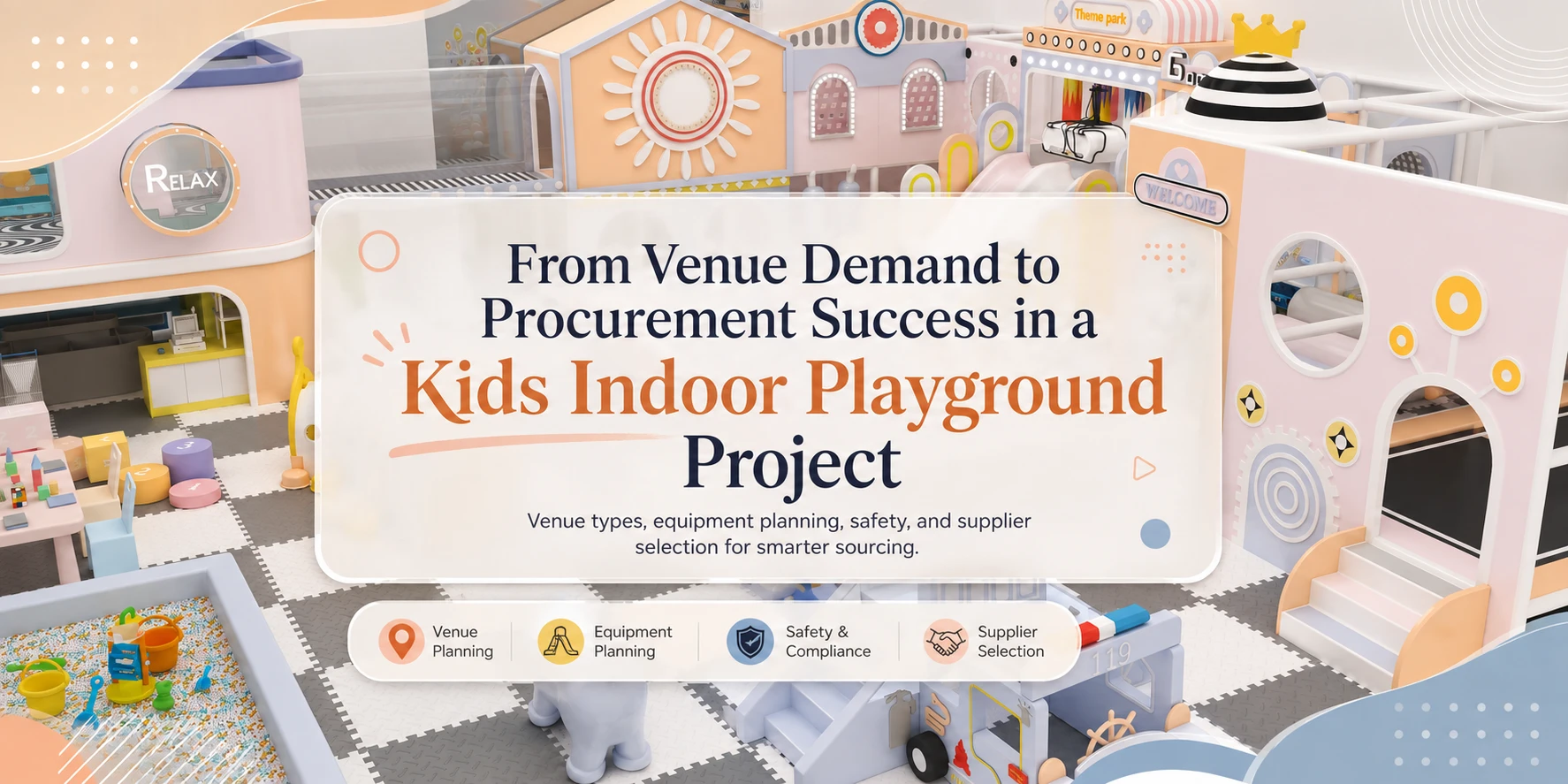
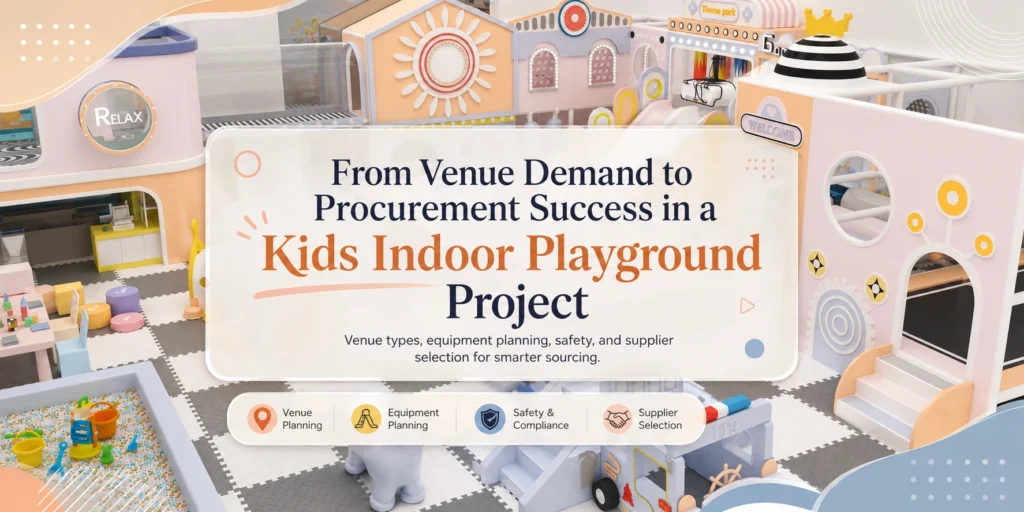
Sourcing for a kids indoor playground project means translating consumer-facing venue pages into procurement decisions. ‘Kids indoor playground’ refers to commercial indoor play spaces—soft play areas, trampoline parks, inflatable zones, and family entertainment centers—designed for children under supervision. For importers, distributors, contractors, and OEM buyers, the search results for this keyword are dominated by venue pages and local lists, which reveal the real purchase triggers: attractions, party packages, safety, and admissions.
Indoor Play Venue Types That Dominate Local Searches
A Birmingham SERP for ‘kids indoor playground’ returns four distinct venue models, and each implies a different procurement route.
- Trampoline and adventure parks (Urban Air Trampoline Park): equipment anchors are trampoline courts, dodgeball zones, and climbing walls. Revenue comes from all-day admission and party bookings, so operators demand high-capacity flooring and durable court padding. This attracts tender teams and contractors handling large fit-outs.
- Soft play centres (Let’s Play Party, Playdate): multi-level playframes, ball pits, and slides form the core. The operational model is hourly or all-day play plus party packages, making layout planning and safety surfacing the key supplier questions.
- Inflatable play spaces: bouncers and obstacle runs are rotated or hired out, so buyers need fire-retardant, lightweight units that install fast. OEM buyers standardising rental inventory lead this segment.
- Family entertainment centres (McWane Science Center): interactive exhibits and science-based learning draw school field trips. Supply teams need museum-grade, low-maintenance interactives and installation support.
Match your quote to the venue’s revenue model before you respond.
Equipment Categories Buyers Need for a Kids Indoor Playground Project
Competitor pages that rank for this keyword sell the experience through “Attractions”, “All Day Play”, and “Admission & Passes”. Mirror those hooks in your equipment list:
- Soft play structures — multi-level playframes, ball pits, slides, and obstacle elements. They anchor toddler and junior zones, so panel finish and cushioning density matter most.
- Trampoline courts and foam pits — the main draw for school-age admissions. Mat tension and foam compression ratings drive safety and replacement cost.
- Inflatable play equipment — low build cost, high turnover. Blower redundancy and fire-retardant fabric affect operating risk.
- Climbing and ninja-warrior courses — high thrill value for all-day play passes. Anchoring and fall zones determine inspection frequency.
- Party room built-in furniture — seating and storage integrated into booking packages; durability affects repeat bookings.
- Ancillary safety surfacing — impact mats and edging underpin every category above.
Each category has different safety and maintenance requirements, so procurement risk varies. Buyers should demand per-category compliance documentation, not a single blanket claim.
Safety, Party Operations, and Admissions as Supplier Selection Criteria
Venue pages that rank for ‘kids indoor playground’ convert visitors with four promises: safety, party packages, field trips, and simple admission. Each promise becomes a supplier deliverable. Use this checklist as your playground supplier comparison criteria when reviewing bids:
- Safety compliance: ASTM or EN standards, fire-retardant materials, impact-absorbing surfacing, anchoring, and load-test certificates.
- Party operations: zone capacity, private rooms, furniture fit-out, and group booking workflows.
- Field trip readiness: group admission rates, staffing ratios, and consent-form handling.
- Admission systems: entry gates, wristbands or RFID pass control, and occupancy tracking.
- Service access: spare parts inventory, maintenance schedules, and repair response times.
Ask for documented proof on every point. Venue operators display these features because they drive bookings; your supplier should match them with certification files and operational support.
How to Shortlist Suppliers for Indoor Playground Tenders and OEM Projects
Local search results for “kids indoor playground” reward venues that publish address, phone, and attractions. Your supplier shortlist should do the same in project terms: prove they can support a specific site, not just send a product catalogue. Work through these four checks:
- Supplier proof — request factory audit reports, current certifications, and export references you can verify.
- Customisation capability — confirm the OEM playground supplier can adapt layouts, colours, and branding for private-label tenders.
- Project services — check for layout design, installation supervision, and after-sales response timelines.
- Procurement evidence — ask for an itemised bill of materials, production lead times, and shipping terms before committing.
A venue page converts parents with opening hours and party packages; a tender-ready supplier converts buyers with documented site-specific support.
About JQ Playground – playgroundsupplierguide.com
JQ Playground (Wenzhou Jiqi Amusement Equipment Co., Ltd.) is a children’s playground equipment manufacturer founded in 1993. The company provides design, customization, large-scale manufacturing, sales, installation guidance, and after-sales support for outdoor playgrounds, indoor playgrounds, soft play, water playgrounds, PE board playgrounds, kindergarten furniture, outdoor fitness equipment, pet playgrounds, and playground facilities. Approved company facts include 180+ employees, a large Wenzhou production base, 20+ production lines, 55 production machines, ISO/BSCI/EN1176/EN71/ASTM/CPC/CPSIC certification references, 100+ patents, free design support, OEM/ODM capability, trial installation before shipping, export experience, and one-year quality warranty.